

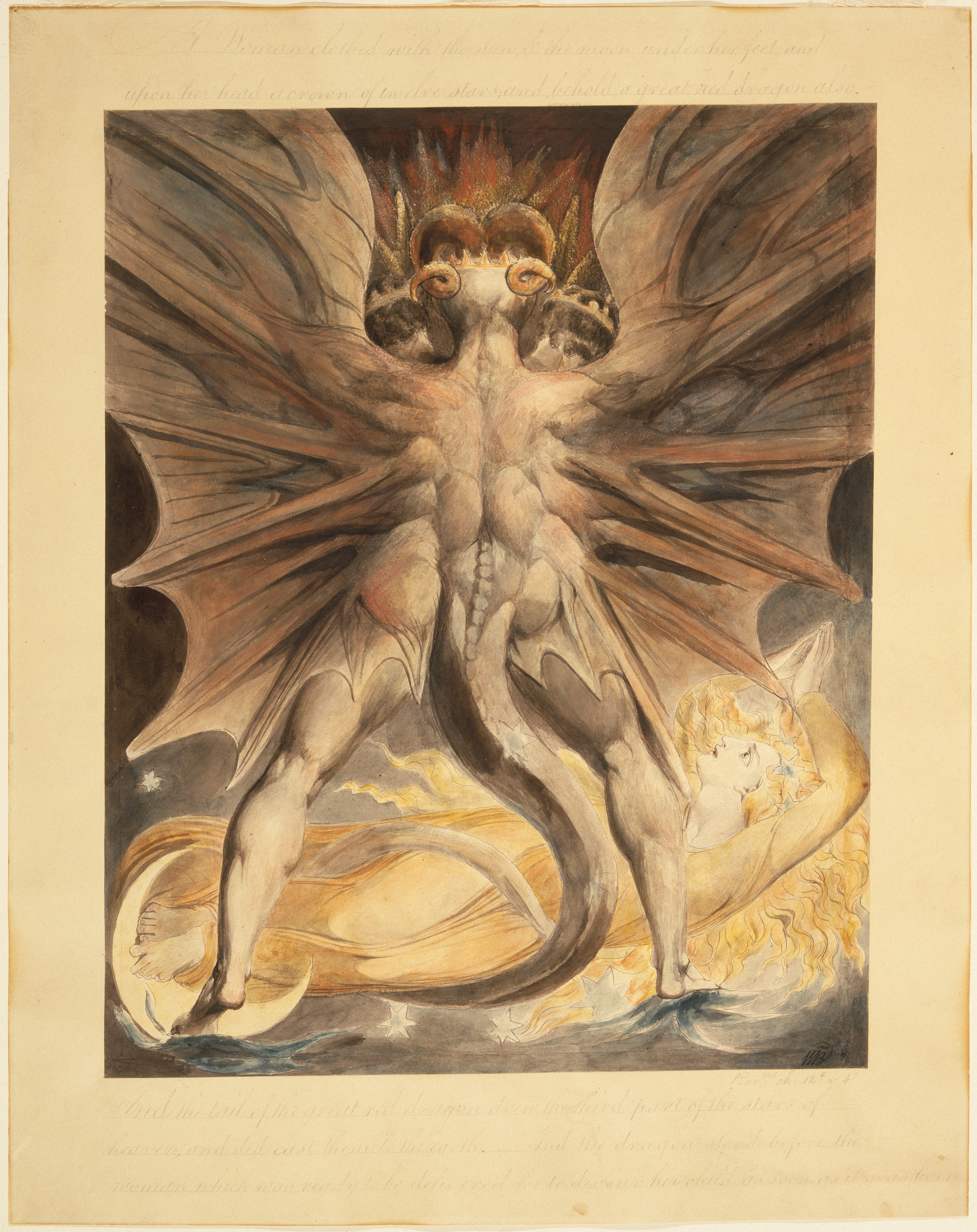
New life is fragile—and the devil hates it.
(Author: Jacek Rzymek)
In verses 1–6 of the 12th chapter of the Book of Revelation, we see the image of a pregnant woman—an expectant mother—whose life and pregnancy (that is, the life of her child) are in mortal danger. The enemy here is the dragon: a monster—an entity not fully defined but extremely dangerous and possessed of immense power. Facing a cruel death, the woman chooses to flee in self-defence, while the child is miraculously saved by God Himself.
Many theologians maintain that this is a biblical description of Mary, the mother of Jesus. Others argue that the passage conceals a symbol of the birth of the Church on earth. And there are other interpretations too. But even without making a decision about the meaning of John’s symbolism, we can learn an important lesson from the pattern he gives us.
In this imagery, John presents a depiction of the danger lurking for someone or something at the very beginning of its existence. The strong seeks to kill the weak; the mature desires to destroy the newborn. This phenomenon is not limited to humans. A young antelope on the savanna faces the same reality: shortly after birth, it finds its footing on the grass, and within hours, it must be capable of fleeing from a predator. The same holds true in the biological world. A tiny plant can be destroyed by any number of things before—after a decade or more—it transforms into a proud tree reaching toward the sky, with a thick, bark-clad trunk.
Here we have a description of a spiritual reality. In many places, the Bible portrays spiritual life by using the language of biological, earthly life. The beginning of spiritual life is depicted as birth—as being born again (John 3:5).
In 1 John 2:12–14, John addresses believers as children, young men, and fathers, describing different dimensions of Christian life and maturity. Each is described in characteristic terms. Let us focus on the descriptions of the child and the young man. The former experiences the forgiveness of sins through the name of Jesus and comes to know God as Father. The young man is one who has learned to overcome the evil one; he has become strong, and the Word of God abides in him.
In the letters to the Corinthians and the Galatians, Paul notes that some people in the local churches he knew remained unaware of the spiritual gifts inherited in Christ, behaved immaturely in their relationships with others, and failed to manifest spiritual fruit in their lives. The Bible clearly states that as we walk the spiritual path with Jesus, we should strive for spiritual maturity. How are we to pursue this in practice?
Let us pause here to examine the nature of the spiritual child and the characteristics of the young man, so that we may find practical guidance in this. The child (1 John 2:12 & 13c) finds righteousness in Christ—not in his own works, the keeping of commandments, or religious activity. Moreover, it knows its spiritual Father.
When we learn to walk with the Father in simple faith, we will inevitably be confronted by a spiritual adversary. We cannot avoid spiritual warfare, attacks, and accusations, nor our own weaknesses and limitations. We may face rejection by others, acquaintances, and sometimes even those closest to us. Jesus Himself went through all of this, as did His disciples. We, too, cannot escape this if we strive for maturity in Christ.
A source of comfort—indeed, our strength in that conflict—will be closeness to and knowledge of the Father, who will never abandon or forsake us, and who will never let us slip from His embrace. A single lost battle does not mean the war is lost. Even a series of lost battles does not determine our eternal destiny. His plans—the plans of our Father in Heaven—for us and our loved ones are greater and deeper, beyond our comprehension at this moment and at this stage.
It is from your Father in Heaven that—amidst the fiercest battles or in a moment of stumbling—you will hear a voice speaking through His means of grace: “I am near, I am upholding you, and you are immensely important to Me. Your life has already been paid for in Christ; your life is as precious as the shed Blood of Christ. Rise, be strengthened by My presence and My Word, and move forward.”
The description John gives us in Revelation concerns both my life and yours: living in weakness, being dependent, and being constantly attacked by Satan. It also concerns the life we share—a life given to us within the community, within the church. Our church, the Confessional Lutheran Church, is young too. Like every Christian and every Christian congregation, we have been facing the dragon’s attack too and therefore need precisely what John points us towards: God’s protection, God’s Word, and the life he gives us together… come and be strengthened in that battle with us as we gather around God’s Word and Sacraments together.