
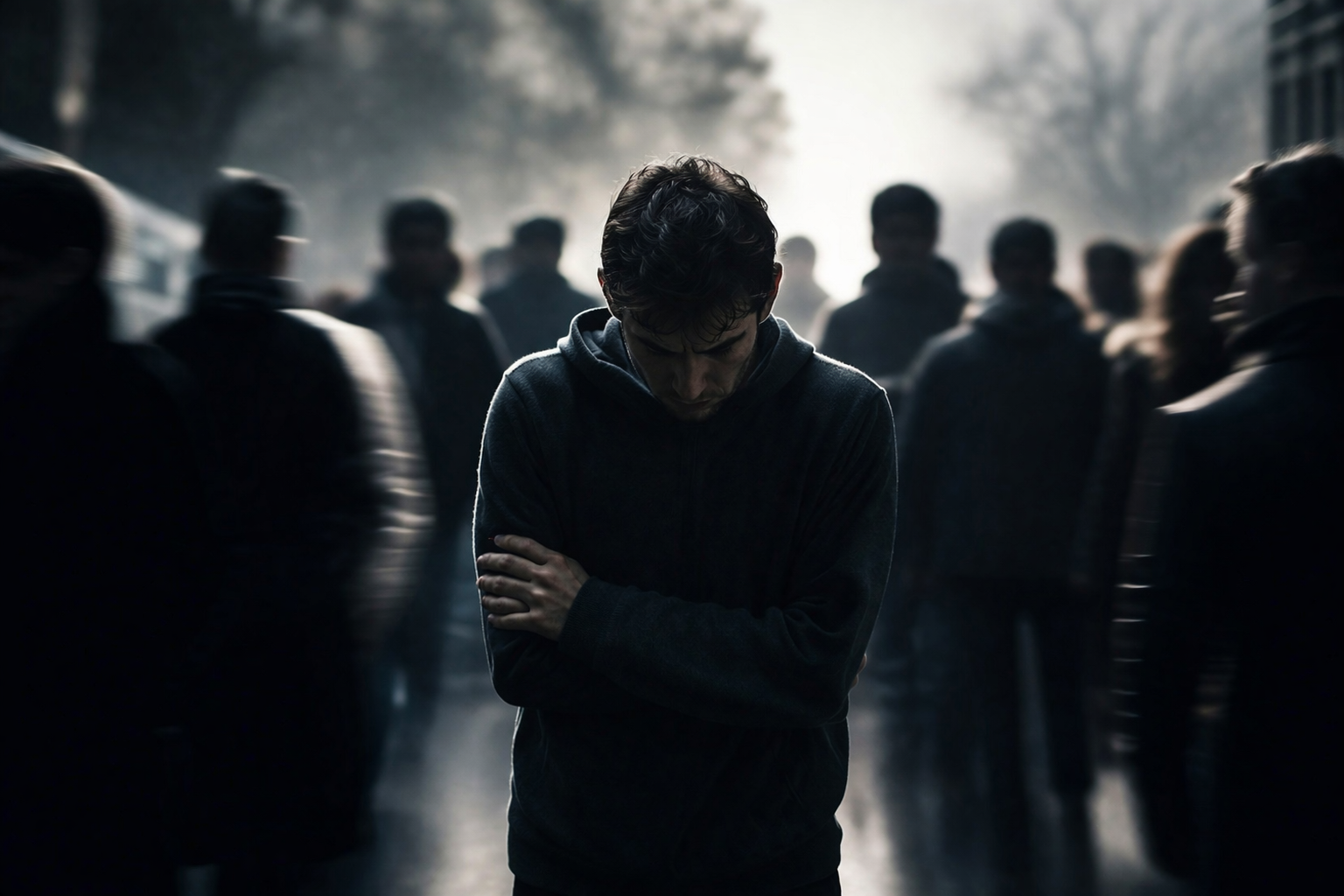
Sometimes another person can make your whole body feel unsafe.
Perhaps someone has threatened you. Perhaps someone has lied about you, or turned others against you. Perhaps it is not one event at all, but years of pressure, conflict, accusation, or fear.
And so you feel scared.
That kind of fear is not abstract. You feel it in your body. It tightens your chest, knots your stomach, drains your strength, and makes it harder to think clearly. It can isolate you. It can also bring out some of your worst instincts: panic, withdrawal, self-protection, despair.
Psalm 27 is a prayer for exactly that kind of fear.
King David wrote it under real threat from other people. And because these are ultimately fulfilled in Christ, these are also words that Jesus himself speaks.
The LORD is my light and my salvation; whom shall I fear? The LORD is the stronghold of my life; of whom shall I be afraid? (Psalm 27:1)
This verse contains the whole Psalm: it speaks something that contradicts what David sees and feels. But he says, “The LORD is my light and my salvation.” That is true before anything improves—and so he speaks it into his fear.
When evildoers assail me to eat up my flesh, my adversaries and foes, it is they who stumble and fall. Though an army encamp against me, my heart shall not fear; though war arise against me, yet I will be confident. (Psalm 27:2-3)
The terrible things that happen to us—especially from other people—often isolate us. We feel lonely, bullied, opposed. David describes through conflict, opposition and accusations what Job calls being “hedged in”. We so often feel this way, because others put us in situations where it is impossible to respond. Any response will make things worse. Nothing will satisfy those driven by anger. Despite David’s lack of control, he speaks confidence rooted in something beyond his experience.
One thing have I asked of the LORD, that will I seek after: that I may dwell in the house of the LORD all the days of my life, to gaze upon the beauty of the LORD and to inquire in his temple. For he will hide me in his shelter in the day of trouble; he will conceal me under the cover of his tent; he will lift me high upon a rock. And now my head shall be lifted up above my enemies all around me, and I will offer in his tent sacrifices with shouts of joy; I will sing and make melody to the LORD. (Psalm 27:4-6)
There is a reality beyond this one we experience. And as David and Jesus had this certainty, Christians today have the sure and certain promise that one day Christ will return to right the wrongs of the world. Praying through my own sufferings, I often call this final day “visible vindication day.” In Christ, all people are vindicated already. This is certain. To be Christian is to receive this and wait for it to be revealed—when God will do nothing except pour out his blessings freely upon us. While our vindication is certain and secured in the past, on the final day, Christ will reveal it to the whole world, so that everybody can see it.
Hear, O LORD, when I cry aloud; be gracious to me and answer me! You have said, “Seek my face.” My heart says to you, “Your face, LORD, do I seek.” Hide not your face from me. Turn not your servant away in anger, O you who have been my help. Cast me not off; forsake me not, O God of my salvation! For my father and my mother have forsaken me, but the LORD will take me in. (Psalm 27:7-10)
And so, David can turn to ask God to do something about his situation now. Not on the basis that he deserves it. Not on the basis that God’s love for him depends on it. But, because he is certain of God’s love toward him—no matter the circumstances—he can ask God with confidence to help him, no matter the circumstances.
Teach me your way, O LORD, and lead me on a level path because of my enemies. Give me not up to the will of my adversaries; for false witnesses have risen against me, and they breathe out violence. (Psalm 27:11-12)
The times we all make our biggest mistakes are when under pressure, attack or opposition from others. David was a shepherd king—he understood people, and he recognised this. Jesus made wise use of this insight to remove himself from others at the times when the crowds and opposition around him was most intense. God has given us objective promises, but he understands how difficult our subjective experience is. That’s why he’s given you these words in the Psalm, so even under intense pressure we can ask him to fulfil his promises to us to guide our steps when we are most likely to fall.
I believe that I shall look upon the goodness of the LORD in the land of the living! Wait for the LORD; be strong, and let your heart take courage; wait for the LORD! (Psalm 27:13-14)
The Lord is good. We can’t see that in our circumstances so much of the time. But one day we will. We don’t have access to his timings, because he is the Lord and we are not. In your time of trial and testing, what your eyes see does not settle what is true. The Lord does—through his objective promises of free forgiveness and good.
Whoever you are reading this, God in Christ is not against you. He has given his perfection to everyone—and so he has certainly given it to you. Receive that any Sunday at Manchester Lutheran Church, or Wednesday online with the Confessional Lutheran Church.
Leave a Reply