
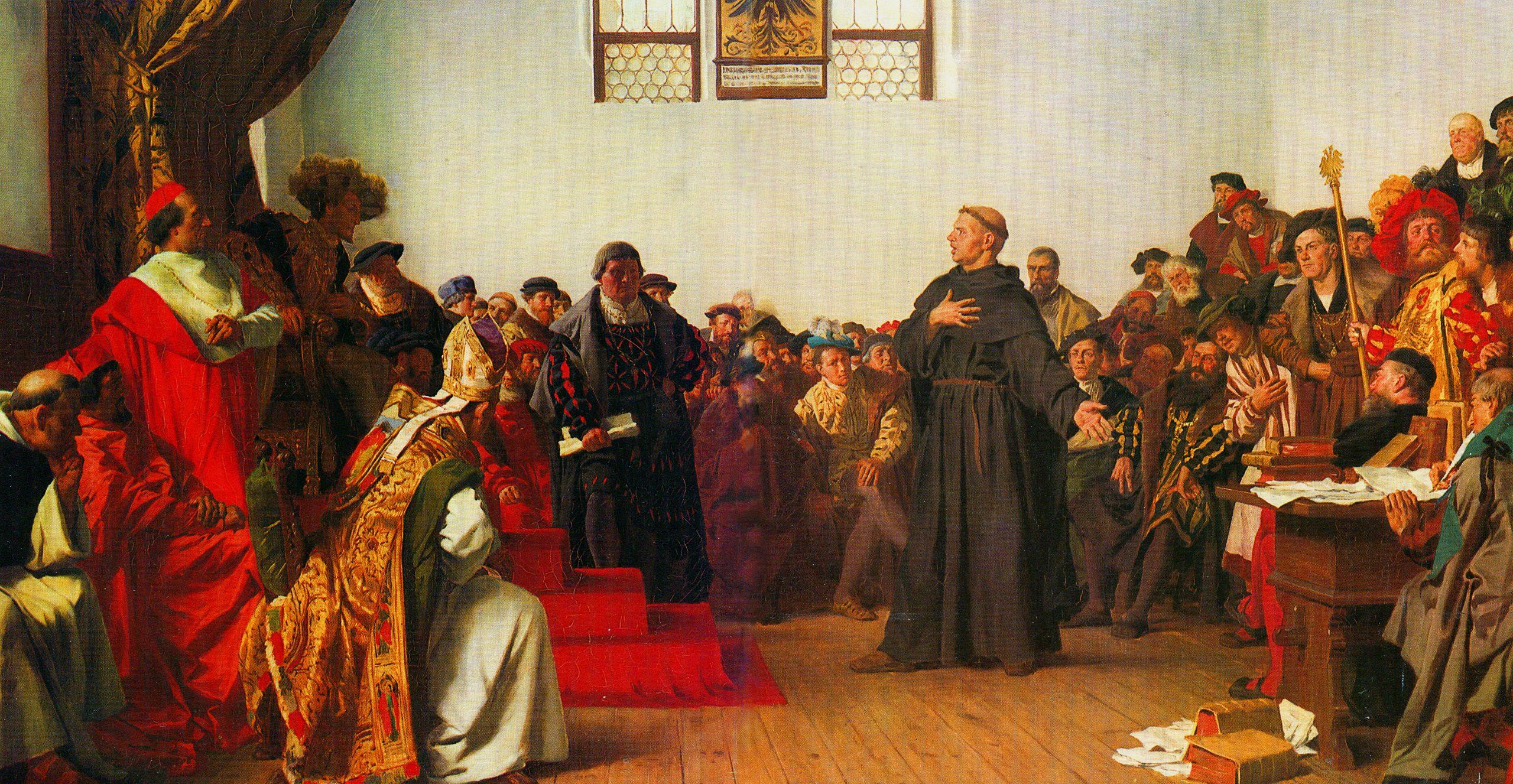
Justification by Faith Alone is only taught consistently in confessional Lutheran churches. Justification by Faith Alone says:
1) The Law condemns universally.
2) The Gospel justifies universally.
3) Faith receives that justification.
4) Assurance rests only in the Gospel.
That’s why I’m Lutheran.
That’s what it means to be Lutheran.
That’s the defining feature of Lutheranism.
Many churches claim to teach “justification by faith alone”—but what they actually teach is a redefinition of the words “justification”, “by faith,” and “alone.”
Many churches claim to be “Lutheran”—but what they actually teach is a redefinition of what the Book of Concord, early Lutherans, and Luther himself say.
These are extremely strong claims. Here’s an even stronger one:
The central, defining, message of the whole Bible is “justification by faith alone.” So, if you don’t teach justification by faith alone in all its purity, then you’re not teaching the Bible in all its purity.
I recognise this sounds strong. It’s not intended to offend, but to state the matter clearly. I’ll do two things to explain:
- Describe justification by faith alone with short, easy to understand, statements.
- Go through each statement and show it is the clear teaching of the Bible, but that even the best teachers from various Christian traditions disagree.
1) What is Justification by Faith Alone?
There are churches that don’t officially claim to teach justification by faith alone (e.g. Roman Catholicism; Eastern Orthodox). So, for simplicity and clarity, I will focus on traditions and people who do.
Justification
| 1. The Law declares all people under God’s wrath, so need justification. | (contra John Piper) |
| 2. The Gospel says God justified all people in Christ’s death on the cross. | (contra John Calvin) |
| 3. Justification is real. | (contra Moïse Amyraut) |
| 4. Justification (the Gospel) alone—not God’s wrath (the Law)—shows us God’s attitude toward all people. | (contra Jonathan Edwards) |
By Faith
| 5. Justification is received through faith alone. | (contra Charles Spurgeon) |
| 6. Faith is only created in us by the Spirit. | (contra Jacobus Arminius) |
| 7. The Spirit gives faith only through the Word of the Gospel coming to us from the outside. | (contra The Westminster Standards) |
Alone
| 8. Faith always produces good works. | (contra Charles Ryrie) |
| 9. Good works play no role in our assurance. | (contra John Calvin) |
| 10. Good works play no role in our final salvation before God. | (contra Tom Wright and John Piper) |
That is justification by faith alone. Read on to see where the Bible teaches all this, and how various Christians disagree.
2) Justification by Faith Alone and Its Misunderstandings Explained
1. The Law declares all people under God’s wrath, so need justification.
The Apostle Paul explains the Law and its most important function clearly in Romans 1:18-3:21:
- The Law reveals the “wrath of God” against “all ungodliness and unrighteousness” (Romans 1:18).
- This “wrath” is not generic emotional anger, but is “God’s righteous judgment”—the legal, judicial, case condemning sin and evil (Romans 2:5). This is why “the law brings wrath” because it brings legal condemnation (Romans 4:15).
- Even before people hear about the Law, “the work of the law” in accusing everyone of wrongdoing “is written on their hearts, while their conscience also bears witness” (Romans 2:15). So while ignorance may excuse some specific acts or mistakes, the overall reality is everyone is ” without excuse” (Romans 1:20).
- The reason God’s wrath (his legal judgment) is revealed in the Law is not to create a way to be justified, as the Law can’t do this (Romans 3:20), but to hold “the whole world… accountable to God” (Romans 3:19), as people gain knowledge of their sin (Romans 3:20), and so are led to Christ for justification (Romans 3:21-22).
But many people in the evangelical and baptist traditions today believe that some individuals do “have an excuse.” John Piper, for example, argues that those who die in their infancy “have an excuse” before God, so will not be condemned for this reason: https://www.desiringgod.org/…/why-do-you-believe-that…
2. The Gospel says God justified all people in Christ’s death on the cross.
The Apostle Paul repeatedly uses universal language to describe God’s justification of all in Christ:
- “all have sinned and fall short of the glory of God, and are justified by his grace as a gift” (Romans 3:23-24)
- “as one trespass led to condemnation for all men, so one act of righteousness leads to justification and life for all men” (Romans 5:18)
All are justified. It is a mistake to conclude from this that all people will be finally saved even if they do not trust in Christ. The Bible doesn’t say this. But it is also a mistake to avoid universal final salvation by denying what the Bible says here and elsewhere: that Christ universally justified all on the cross.
John Calvin, for example, claimed that God explicitly reprobated some to eternal damnation: https://ccel.org/ccel/calvin/institutes.v.xxiv.html…
3. Justification is real.
On the cross, Christ cried “It is finished.” (John 19:30). Because, at the cross, the following things were truly finished and achieved:
- Christ took away “the sin of the world” (John 1:29).
- God truly reconciled the world to himself, which meant “not counting their trespasses against them” (2 Corinthians 5:18-20).
- Christ “died for all, therefore all have died” (2 Corinthians 5:14)
- Christ propitiated the sins “of the whole world” (1 John 2:2). This means he bore the judgment they deserved.
- Christ “bought” even heretics who would later deny him and bring upon themselves swift destruction (2 Peter 2:1).
But even though Jesus said his work was “completed,” and the three most prominent writing apostles (John, Paul and Peter) talk about Christ’s justification of the whole world as true and real, throughout the last 2,000 years people have qualified this language.
The Western Medieval church said Christ’s death merited forgiveness of sins for the whole world. The Reformed churches said Christ’s death was the grounds of forgiveness of sins for the whole world (or even just the elect).
The problem is, scripture does not speak in this qualified way. It speaks straightforwardly as though Christ really did justify all people.
But even those who tried to make corrections and take this language of scripture seriously, still diminish the reality and truth of Christ’s atonement on the cross. Moïse Amyraut, for example, was a Reformed theologian who argued that Christ’s universal atonement is only hypothetical (primary source not online): https://en.m.wikipedia.org/wiki/Amyraldism…
4. Justification (the Gospel) alone—not God’s wrath (the Law)—shows us God’s attitude toward all people.
The Old and New Testaments very clearly tell us that the Law is not a full revelation of who God is. It is given as a tool that serves the Gospel. It is not equal to the Gospel in what it reveals about God. Nor is it supposed to be an end in itself:
- “As I live, declares the Lord GOD, I have no pleasure in the death of the wicked, but that the wicked turn from his way and live” (Ezekiel 33:11).
- “But now the righteousness of God has been manifested apart from the law, although the Law and the Prophets bear witness to it” (Romans 3:21).
- “God shows his love for us in that while we were still sinners, Christ died for us.” (Romans 5:8)
In modern evangelicalism, things the Bible reveals as judicial (works of the Law)—including of God’s wrath—have become increasingly treated as psychological and emotional. This goes beyond what God explicitly says about the Law, and contradicts what he explicitly says about how the Gospel alone reveals his heart.
This is seen particularly strongly in Jonathan Edwards’ famous evangelical sermon Sinners in the Hands of an Angry God, where being “under God’s wrath” God is graphically presented as God feeling emotionally furious with sinners.
But the Bible says God’s wrath is a judicial declaration of the Law (Romans 2:5). Which is an “alien” work for God (Isaiah 28:21). And the Gospel alone is God’s proper revelation of his heart toward sinners—that he truly loves even his enemies (John 3:16).
5. Justification is received through faith alone.
In Christ, God has truly justified everyone, and wants everyone to be saved. But, by nature, none of us want this. Instead, we want to justify ourselves. Somehow, this instinct is there even from conception:
- Behold, I was brought forth in iniquity, and in sin did my mother conceive me. (Psalm 51:5)
The problem is not God’s will, but our will. God wants us all to be saved (1 Timothy 2:4), but we don’t want to be helped (John 3:19). Christ justified the whole world, but God needs to remove our hard heartedness so that we can receive and benefit from it. This receiving of what Christ has done—which is trusting him rather than ourselves—is what the Bible calls “faith”:
- The natural person does not accept the things of the Spirit of God (1 Corinthians 2:14)
- Christ’s justification of the whole world is received through faith (Romans 3:25; 4:24).
Many people in the history of the church have denied this need to receive justification through faith: either by adding something to faith (which we’ll discuss next) or by denying the need for faith.
For example, Charles Spurgeon, the famous Reformed Baptist preacher believed infants who died could be justified without faith: https://www.spurgeon.org/res…/sermons/infant-salvation/…
6. Faith is only created in us by the Spirit.
Because we are all conceived in sin, which is trusting ourselves, we cannot create or give ourselves faith, which is trusting in Christ. The Bible says this plainly in several places:
- “no one can say ‘Jesus is Lord’ except in the Holy Spirit.” (1 Corinthians 12:3)
- “For by grace you have been saved through faith. And this is not your own doing; it is the gift of God,” (Ephesians 2:8).
- “unless one is born of water and the Spirit, he cannot enter the kingdom of God” (John 3:5).
One of the biggest misunderstandings around today is that faith is a rational decision made by human beings. That’s why so many Christians in the West no longer baptise infants—because they don’t think infants meet the intellectual standard required to make a decision to believe.
One influential person from history who believed that faith is a decision is Jacobus Arminius, and many people today who follow his teaching are known as “Arminians,” (primary source not online): https://www.christianstudylibrary.org/…/arminianism-and…
7. The Spirit gives faith only through the Word of the Gospel coming to us from the outside.
Creating faith in us is all God’s work. We don’t create, sustain or contribute to our faith at all. We benefit from it as a gift. It is created in us by God’s Spirit working in us from the outside. He always gives this faith through God’s Word of the Gospel, which comes to us through various means: preaching, Baptism, the Lord’s Supper, spoken to us by other Christians, etc.:
- “So faith comes from hearing, and hearing through the word of Christ.” (Romans 10:17).
- “This is why Jesus said we must ‘be born of water’” (John 3:5).
A lot of people are confused today about how and where God works to give faith. Some think we can spontaneously create faith in ourselves, or we can be given faith through observing the natural world, thinking carefully, or receiving acts of kindness. But God only creates faith through the Gospel—which is why he gave us the Gospel.
Even some old confessional statements are confused about this. For example, the Westminster Standards teach that prayer—which is our words, not God’s Word; a work we do, not a work he is doing—can also create or strengthen faith: https://thewestminsterstandard.org/westminster-larger…/… (see number 154)
8. Faith always produces good works.
Good works are necessary. They are not necessary for salvation. They are not harmful to salvation. They are necessary because God commands them. And like fruit from a tree, God always brings good works in the lives of those to whom he has given faith:
- “faith by itself, if it does not have works, is dead.” (James 2:17)
Because so many people in history have tried to add works to faith as a condition of justification, many are tempted to overcorrect and deny that good works are necessary at all. For example, Charles Ryrie, a Dispensationalist Baptist, believed people could have saving faith without a transformed life of good works (primary source not online): https://en.m.wikipedia.org/wiki/Free_grace_theology…
9. Good works play no role in our assurance.
The Bible clearly teaches that our assurances rests exclusively on Christ. That is what faith is. We should never look inside ourselves for assurance, even in a “secondary” or “supporting” way, but we should only look to Christ:
- “let us run with endurance the race that is set before us, looking to Jesus, the founder and perfecter of our faith,” (Hebrews 12:1-2).
- “For there are three that testify: the Spirit and the water and the blood; and these three agree.” (1 John 5:7-8)
- “I count everything as loss because of the surpassing worth of knowing Christ Jesus my Lord. For his sake I have suffered the loss of all things and count them as rubbish, in order that I may gain Christ and be found in him, not having a righteousness of my own that comes from the law, but that which comes through faith in Christ, the righteousness from God that depends on faith” (Philippians 3:8-9).
Good works are necessary (but not for salvation). And good works always flow from faith as fruit from a tree. But this does not mean that good works should be used as evidence to assure us that we have true faith. Many people make this leap of logic. But it goes beyond what the Bible actually says, and shifts our assurance—even if only partially—onto ourselves and what we see inside ourselves.
John Calvin taught that we can look at our good works in a secondary way to give ourselves assurance of our salvation. You can see that in his Institutes, but for simplicity, here’s a nuanced explanation from a source sympathetic to Calvin: https://learn.ligonier.org/…/is-the-assurance-of-our…
To hear more about what the difference between creating assurance and the fruit of faith, check out these recent sermons:
10. Good works play no role in our final salvation before God.
To be justified is to have your sins counted against Christ, and Christ’s righteousness counted for you. What is sometimes called “final salvation” is simply this justification happening on the last day, the day when Christ will judge the world:
- God has fixed the day when this will happen (Acts 17:31).
- Christ will render to each one according to his works (Romans 2:6; Revelation 20:12)
- But those who are justified will be rewarded for Christ’s works (Romans 5:9, 19; 8:1)
- On the last day, those who pass the final judgment do so purely because their names are written in the book of life—Jesus doesn’t even open their book of works (Revelation 20:11-15)
This is really important. It matters. Justification and “final salvation” are the same thing in this sense: final salvation is simply being justified on the last day. You will be justified on the last day for the same reason you are justified today: because Christ died for you.
God will point at your works for the world to see his decision to justify you was right. But he himself will not look at your works—he will look at Christ’s works for you.
Many people have been changing this message for a very long time.
For example, the Anglican theologian Tom Wright believes that our transformed life of good works plays a role in final justification https://www.thegospelcoalition.org/…/what-n-t-wright…/
Famously, the Baptist preacher John Piper had a feud with Tom Wright over the issue of justification. But, whatever their differences, Piper also believes that God will look at your works on the last day as part of your final salvation: Does God Really Save Us By Faith Alone?
You Are Justified—Be Assured of It
This is justification by faith alone:
1) The Law condemns universally.
2) The Gospel justifies universally.
3) Faith receives that justification.
4) Assurance rests only in the Gospel.
Christ justified you when he died on the cross. To benefit from that, you need to be assured of it.
God gives you that assurance through the Word of the Gospel. And he’s placed that Word in a public place where you know you can receive it: the church.
Come along any week in person or online, and God will give it:
Leave a Reply