
The church is full of rubbish people.
People making mistakes.
People struggling with doubt.
People who behave badly.
How on earth is it still here?
That is the question that Mark answers at the end of his Gospel.
I was taught my whole life that the end of Mark’s Gospel is not original. Because the ending is missing from several important early copies. And then when you read the ending of Mark it seems so random.
People pick up snakes. It re-introduces Mary Magdalene. It seems very strange.
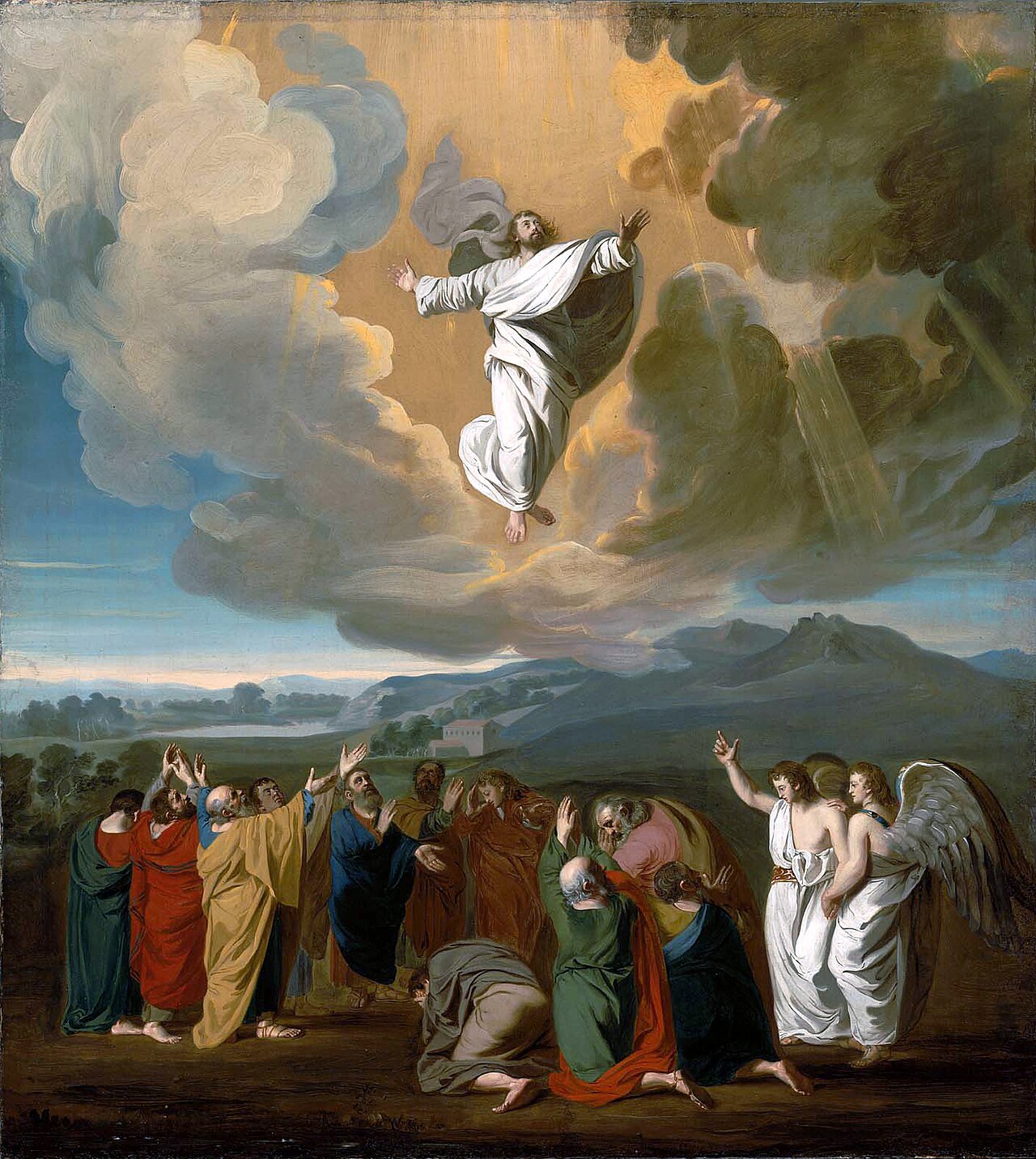
Today is Ascension Day. 40 days after Easter. The day Jesus ascended into heaven. And from some of the earliest times in the church, the ending of Mark’s Gospel has been read on this day.
The ending is part of what Mark wrote. After the idea of “the book” was invented, Christians were some of the earliest to adopt it, as a replacement for the scroll.
Someone put a pile of papers together, and the last page fell off.
But more significantly: when you read the ending of Mark carefully, on a second glance—it fits perfectly with everything else he says. Even though at first, it seems very odd.
The ending of Mark is about Jesus’ ascension into heaven. And the ascension, Mark tells us, is what answers that question:
Why hasn’t the church collapsed?
Because, throughout Mark’s Gospel, Jesus’ disciples: the people who become the church, have failed him over and over again.
The first hint that there’s an issue comes in chapter 1 verses 36-38:
And Simon and those who were with him searched for him, and they found him and said to him, “Everyone is looking for you.” And he said to them, “Let us go on to the next towns, that I may preach there also, for that is why I came out.”
Something just seems off. The disciples and Jesus don’t seem to be on the same page.
But it’s after he’s commissioned them, shown them his signs, and given them his teachings that in chapter 4, when they see him calm a storm simply with his words, that the disciples start to fear him.
And Jesus says:
“Why are you so afraid? Have you still no faith?” And they were filled with great fear and said to one another, “Who then is this, that even the wind and the sea obey him?” (Mark 4:40-41)
Not because they’re confused about his power, but because they’re scared of how he’ll use it.
We posted a video on that story a few weeks ago: Should I Be Scared of God?
And it only gets worse from there.
Jesus shows he is the new and better Moses, by feeding 5,000 people with miraculous bread, but, the disciples in Mark 6:52:
did not understand about the loaves, but their hearts were hardened.
He repeats several of his miracles in non-Jewish, Gentile, areas, showing that he is a new Moses not just for the Jews, but for the whole world.
Even the numbers of the leftovers at the miracles point to this: 12 baskets for the 12 tribes of Israel. 7 baskets for the 7 days of creation.
But the disciples still get distracted and worried about not having enough bread, and finally Jesus says:
“Do you not yet understand?” (Mark 8:21)
Jesus predicts he will suffer for sins, and so his top disciple Peter rebukes him. Jesus has to say:
“Get behind me, Satan! For you are not setting your mind on the things of God, but on the things of man.” (Mark 8:33)
The disciples argue about who is greatest. James and John try to manipulate him to get the best seats in glory.
Judas betrays him. Peter denies him. And one disciple is so desperate to disassociate from Jesus, he even runs away naked.
So it is no surprise that on Easter Day, when Jesus rises from the dead, none of the disciples believe it.
These guys are failures, they’re unbelievers. And so by the end of his Gospel, Mark has raised this question: Why hasn’t the church collapsed?
Now, at the end, explaining his Ascension into heaven, Mark’s answer is very simple: The Word of Jesus brings miraculous life, and Jesus himself is working wherever the church preaches it.
Just look at Mark 16:14:
Afterward he appeared to the eleven themselves as they were reclining at table, and he rebuked them for their unbelief and hardness of heart, because they had not believed those who saw him after he had risen.
Jesus appears to his fledgling church, and addresses their problem. The problem they’ve had all along: they don’t believe the Word of who he is.
And so Jesus gives them his solution to that in vv. 15-16:
And he said to them, “Go into all the world andproclaim the gospel tothe whole creation. Whoever believes and isbaptisedwill be saved, butwhoeverdoes not believe will be condemned.
Jesus’ solution is this: Preach the Word. Preach the Gospel.
What’s the first thing Jesus says in Mark’s Gospel? It’s in chapter 1, verse 15:
“The time is fulfilled, and the kingdom of God is at hand; repent and believe in the gospel.”
A Gospel word not just for Israel, but for Gentiles too. Just as Isaiah the Prophet says in chapter 40, which Mark himself quoted in verse 2 of his entire Gospel.
That’s why whoever believes and is baptised will be saved. Because Baptism is nothing other than this Gospel attached to water.
And Jesus shows us that God’s word has power.
Just as God’s Word had power in the Exodus, where Moses led the Israelites out of slavery to Pharaoh in Egypt; just as God’s Word had power in the return from exile, where God led the Jews out of bondage to the powers in the East; now God’s Word has power in the church, where Jesus himself leads you and me out of slavery to sin, the world and the devil.
That’s what Jesus explains in v. 17:
And these signs will accompany those who believe:
He doesn’t say accompany every individual believer. He doesn’t say the signs will permanently accompany those who believe. How long the signs will remain, is a detail we learn about elsewhere, outside of Marks’ gospel, in the book of Acts, and the letters of the apostles.
The important thing is to look at what the signs are, v. 17:
in my name they will cast out demons;
The battle between Satan and Jesus started at the beginning of Mark.
Jesus has been casting out demons, redeeming people from Satan’s kingdom, until finally he defeated Satan on the cross.
Pharaoh in the Exodus was a picture of Satan. The idolatry in Babylon a picture of his kingdom. Jesus is in reality the solution that saves us.
And he goes on:
they will speak in new tongues;
Babel is reversed. The Gospel is global. As Isaiah says, the nations come to him. This is why Jesus repeated those miracles in Gentile areas.
But he doesn’t end there, v. 18:
they will pick up serpents with their hands;
A reminder of the serpents that attacked Israel in Numbers, a throwback to Moses and Aaron who’s staff would turn into a serpent. A reminder that God promises, the seed of the woman will crush the serpent under foot.
And Jesus still isn’t finished:
and if they drink any deadly poison, it will not hurt them;
In Mark’s Gospel, people who were half dead—even fully dead: Jesus had saved them.
In Exodus 15: Israel had just left Egypt, and what do they find? Bitter waters at the place they call Marah. That prompted doubt and discouragement from them.
But Jesus is a new and better Moses. Even deadly poison won’t hurt them.
And finally:
they will lay their hands on the sick, and they will recover.”
Just as Jesus did to show the power and goodness of his Word through the beginning of Mark’s Gospel.
The Word of Jesus brings miraculous life. And God’s power is attached to it.
Because… and Mark finishes with this… Jesus’ ascension means he is present everywhere his Word is.
That’s the point of Jesus’ ascension. That’s what it means. He’s not absent, in some distant place away from us.
Don’t read the Bible through a materialistic lens.
The Old Testament tells us clearly what God’s right hand side is. God’s right hand is not a physical place.
Exodus 15 verse 6:
Your right hand, O LORD, glorious in power,
your right hand, O LORD, shatters the enemy.
Psalm 20 verse 6:
Now I know that the LORD saves his anointed;
he will answer him from his holy heaven
with the saving might of his right hand.
Isaiah 48 verse 13:
My hand laid the foundation of the earth,
and my right hand spread out the heavens;
when I call to them,
they stand forth together.
God’s right hand is not a physical place that limits him. It’s the way he exercises power everywhere.
So, the question is not “Where is God’s right hand physically?” but “In what way does he exercise his right hand powerfully?”
Know this: it’s not through the Law, or accusation, by the power of Satan.
Hear the prophet Zechariah, chapter 3:
Satan standing at his right hand to accuse him. And the LORD said to Satan, “The LORD rebuke you, O Satan! (Zechariah 3:1-2)
No, God exercises his power through the God-man who died for you. Psalm 110 verse 1:
The LORD says to my Lord: “Sit at my right hand, until I make your enemies your footstool.”
That is what Mark tells us at the end of his Gospel. Chapter 16 verses 19-20:
So then the Lord Jesus, after he had spoken to them,was taken up into heaven and sat down at the right hand of God. And they went out and preached everywhere, while the Lord worked with them and confirmedthe messageby accompanying signs.
So: Why hasn’t the church collapsed?
Everywhere God’s Word is: there is Christ working in power.
Everywhere the Gospel is preached: God’s right hand—the God man who died for you—is active and busy.
Today is Ascension Day. And this is the Ascension for you: As you receive the Word, you receive Christ acting in power.
Come and receive that Word with us each week:
- In person in Manchester every Sunday.
- Online from anywhere every Wednesday.
Leave a Reply