
You can read the Bible cover to cover, repeatedly, in multiple translations… and still not understand it.
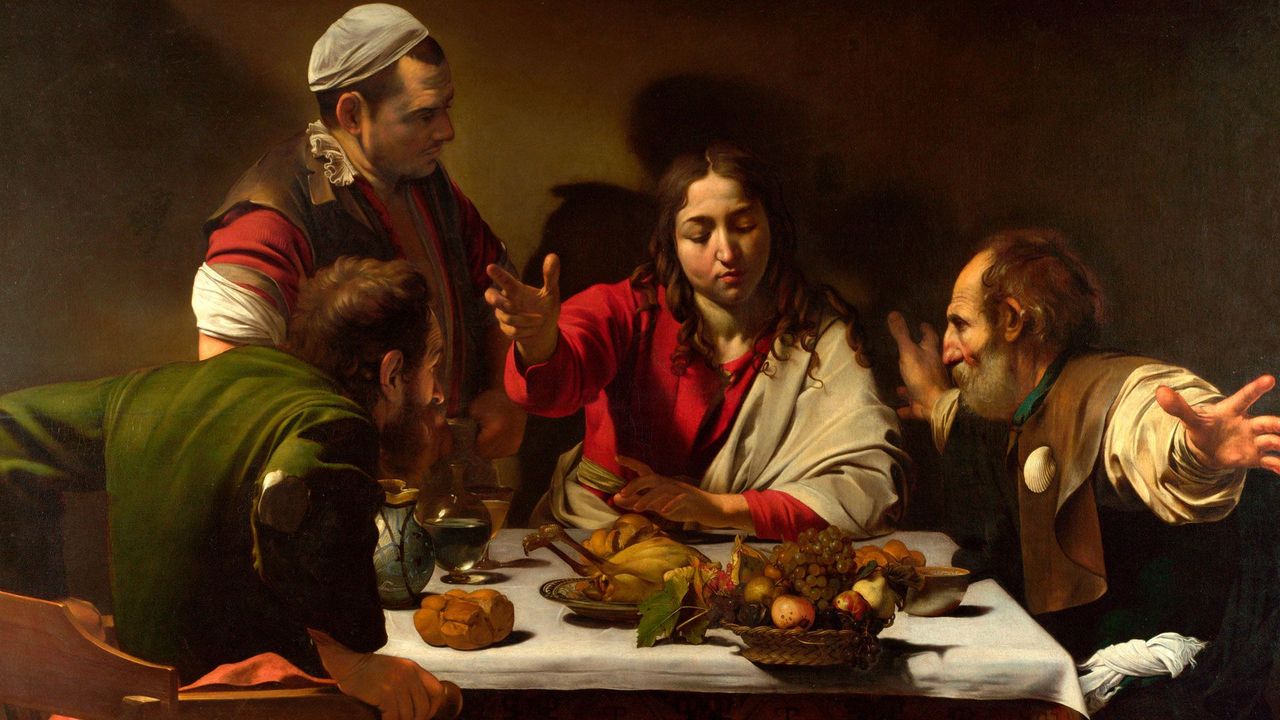
At the end of Luke’s Gospel, some of the disciples who’d been with Jesus for years, heard his teachings, even seen his miracles, still did not understand. Even after Jesus rose from the dead and appeared to them, they still didn’t recognise him. Leading the most patient man who ever lived to say:
“O foolish ones, and slow of heart to believe all that the prophets have spoken! Was it not necessary that the Christ should suffer these things and enter into his glory?” And beginning with Moses and all the Prophets, he interpreted to them in all the Scriptures the things concerning himself. (Luke 24:25-27)
They later describe their experience as their hearts “burning” within them as Jesus opened the Scriptures to them. Then, when he blessed, broke and gave them the bread, their eyes were opened and they recognised him:
When he was at table with them, he took the bread and blessed and broke it and gave it to them. And their eyes were opened, and they recognised him. (Luke 24:30-31)
If you want to understand God’s Word, God has to open your eyes for you. These disciples didn’t work out the truth through effort and study. Their understanding was given to them as they received God’s Gospel entirely passively. Understanding is not something you manufacture by intellectual effort. It is something Christ gives through his Gospel.
Later in the chapter, Jesus explains to his disciples that this Gospel of his grace is the key that opens our minds to understand all the scriptures:
Then he said to them, “These are my words that I spoke to you while I was still with you, that everything written about me in the Law of Moses and the Prophets and the Psalms must be fulfilled.” Then he opened their minds to understand the Scriptures, and said to them, “Thus it is written, that the Christ should suffer and on the third day rise from the dead, and that repentance for the forgiveness of sins should be proclaimed in his name to all nations, beginning from Jerusalem. (Luke 24:44-47)
Now, while some parts of the Bible are harder to understand than others, you don’t need to understand all the nooks and crannies to understand the message of the Bible.
You don’t need years of study. You don’t need some secret technique. You don’t need the magisterium of a large church to explain it to you, or an elite class of interpreters.
Martin Luther understood this, and wanted to help those who found the Bible confusing understand it and receive its message as quickly and simply as possible. And this is why he wrote the Small Catechism.
The Small Catechism is not an extra “book” alongside the Bible. It grew out of Luther’s preaching and pastoral instruction. Luther took the core texts of the Bible and summarised what the rest of the Bible says about them. He began with the Ten Commandments, the Apostles’ Creed and the Our Father. He then added Baptism and the Lord’s Supper, followed by further material to help Christians receive the Gospel and live out their faith. The aim was simply to summarise and condense what the Bible itself clearly teaches.
(You can read the Small Catechism in simple, modern, British English for free here: https://lutheran.ch/the-small-catechism/)
Preface) The Word in the Church
Before the main parts of the catechism, Luther addresses pastors and preachers. He insists that Christians need to be taught God’s Word faithfully and brought regularly to receive Christ’s Sacrament.
This is because the Bible tells us clearly that:
faith comes from hearing, and hearing through the word of Christ. (Romans 10:17)
And this is why God has appointed preachers and teachers:
And how are they to hear without someone preaching? And how are they to preach unless they are sent? As it is written, “How beautiful are the feet of those who preach the good news!” (Romans 10:14-15)
A) Three Core Teachings of the Bible
The first three sections of the Small Catechism simply summarise what the Bible teaches us about three core things: God’s Law, God’s Gospel, and how faith responds to the Gospel in prayer.
1) The Ten Commandments—The Law Shows We Need Jesus
Jesus taught that the whole Bible depends on God’s command to love God and love others:
On these two commandments depend all the Law and the Prophets. (Matthew 22:40)
This command to love is God’s Law, which is given to Israel in Exodus 20:3-17 as the Ten Commandments. These commandments describe what love looks like, and so show us why we need Jesus, because we all fail to love. In the context they were given they include a sign that was just for the people of Israel under the Old Covenant (Exodus 31:12-17).
Luther explains all this in a very simple way in the Small Catechism by summarising how the Bible itself explains the Ten Commandments.
2) The Apostles’ Creed—The Gospel Gives Us Jesus
Echoing Jesus’ words at the end of Luke’s Gospel, the apostle Peter explains that the whole Bible bears witness to the Gospel of Jesus Christ:
To him all the prophets bear witness that everyone who believes in him receives forgiveness of sins through his name. (Acts 10:43)
This Gospel is described succinctly in the Apostles’ Creed, a very short summary of what the four Gospels reveal about the living God:
The Father who made us, simply because he loves us in Christ (Matthew 6:25-34).
The Son who was born as the man Christ, suffered and died after being falsely convicted under Pontius Pilate, and who rose again and now reigns at the Father’s side (the basic story of all four Gospels).
The Spirit who works through the Word in the church to give us what Christ achieved for us (John 14-16).
Luther shows us in the Small Catechism that in this simple, short, summary of the Gospel, is the depth of God’s unconditional love for us.
3) The Our Father—Faith Receives the Gospel Expressed in Prayer
In the centre of Jesus’ longest sermon recorded in the Bible, he teaches his disciples how to express their trust in God by praying. The Our Father teaches us what it means to trust God for all things in Jesus’ name, which we express by calling on his name in our time of need.
We often call this prayer “the Lord’s Prayer” because Jesus teaches us to pray it in Matthew 6:9-13. But Luther liked the old tradition of calling it the “Our Father,” because as we echo Jesus’ words from the first line it draws our minds into the act of praying it.
B) Five Key Elements of the Christian Life
The last five sections of the Small Catechism simply summarise what the Bible teaches us about the key experiences God has given Christians. God is so kind in giving us so many ways to receive his Gospel. The Small Catechism describes three of the ways Christians receive the Gospel: in Baptism, Absolution, and the Lord’s Supper. In response to this Gospel, Christians express their trust in their Father through daily prayer and live lives of good works in Vocations of love.
4) Baptism
Baptism is God’s Gospel attached to water. In the Small Catechism, Luther explains the four clear places in the New Testament that teach us about Baptism (Matthew 28; Mark 16; Titus 3; Romans 6).
5) Confession
Jesus gave his Church the power of the Keys, which is the authority to forgive and retain sins through his Word (Matthew 16; 18; John 20).
Individual Christians speak this forgiving Word to one another privately. Pastors exercise it publicly on behalf of the whole Church.
In the Small Catechism, Luther explains simply what this means and how Christians receive absolution pastorally.
6) Lord’s Supper
The Sacrament of the Altar, or Lord’s Supper, is God’s Gospel attached to bread and wine. In the Small Catechism, Luther explains the four clear places in the New Testament that teach us about the Sacrament (Matthew 26; Mark 14; Luke 22; 1 Corinthians 11).
7) Daily Prayers
Luther provides simple forms for morning, evening and mealtimes, teaching Christians to pray with the Our Father, the Creed and words drawn from the Bible, particularly the Psalms.
8) Vocations
God has prepared good works for us to perform, and so gives us offices and states of life to live in to serve others. At the end of the Catechism, Luther collects together passages that describe these Vocations from the letters of Peter, Paul and the book of Hebrews:
Preachers of the Gospel (1 Timothy 3 and Titus 1) and hearers of the Gospel (1 Corinthians 9; Galatians 6; 1 Timothy 5; Hebrews 13)
Civil authorities (Romans 13) and their subjects (Matthew 22; Romans 13; 1 Timothy 2; Titus 3; 1 Peter 2)
Husbands (1 Peter 3; Colossians 3) and wives (1 Peter 3)
Parents and children (Ephesians 6)
Employees and employers (Ephesians 6)
Common virtue (1 Peter 5), single people (1 Timothy 5) and the community (Romans 13; 1 Timothy 2)
The Grammar of the Bible
If you truly understand these biblical texts in the Small Catechism, you have the Bible’s own framework, or grammar, to understand the whole Bible. If you don’t understand these eight things, then much of the rest of the Bible will feel confusing.
This is how you understand the Bible: by using it as he commanded, and receiving his promises in simple faith.
Hear God’s Law, which exposes your need for Jesus.
Hear God’s Gospel, which gives you the death and victory of Jesus.
Learn the basic grammar of the faith in the Small Catechism.
And gather with other Christians to receive God’s Word and Sacraments.
God has sent preachers into his Church so that you can hear his promises and receive faith together with a community of other Christians.
If you live in or near Greater Manchester, come gather with us: Manchester Lutheran Church meets in person every Sunday, 10:45 for coffee, 11:00 for the service: https://mcrlt.ch/sundays/
If you live outside Greater Manchester, come gather with the Confessional Lutheran Church online congregation that meets every Wednesday. 6pm online: https://lutheran.ch/online-service/
Leave a Reply