

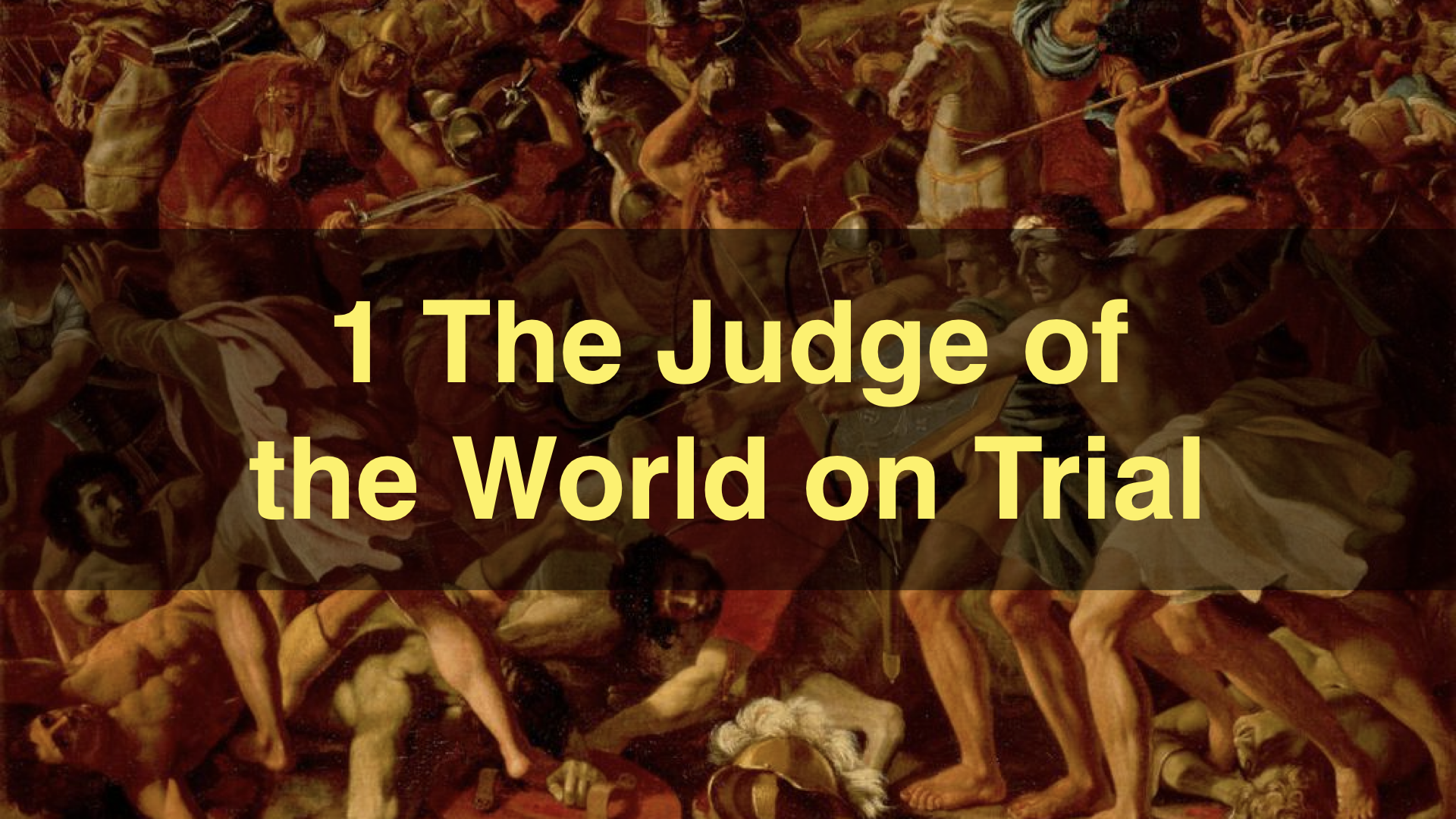
You are completely right to feel troubled by genocide in the Old Testament.
Let’s not be mealy mouthed about this: God really did command Israel to commit genocide. This really did happen. Probably the starkest example is from 1 Samuel 15:1-3, which I’ll quote here in full:
And Samuel said to Saul, “The LORD sent me to anoint you king over his people Israel; now therefore listen to the words of the LORD. Thus says the LORD of hosts, ‘I have noted what Amalek did to Israel in opposing them on the way when they came up out of Egypt. Now go and strike Amalek and devote to destruction all that they have. Do not spare them, but kill both man and woman, child and infant, ox and sheep, camel and donkey.’”
Of course you’re horrified by that. I am.
And let’s not play with words—this is not something you can “interpret away.” This is a direct command from God, using the prophetic formula “Thus says Lord”. It is absolutely unambiguous: Saul is commanded to kill everyone and everything. And it explicitly includes babies.
Now, many of my atheist friends simply point to verses like these, immediately cry “God is evil! The Bible cannot be trusted!” and then stop listening to anything else that is said.
That isn’t rational.
It’s emotionally understandable, and I empathise. But it’s not rational. Because there are some very important things the Bible says about this, which I’ll be saying in this post and part 2 tomorrow. And just because something is hard to hear, does not make it wrong.
On the other hand, many of my Christian friends don’t listen to what the Bible says on this either. But let me caveat that by saying: You are not a bad Christian if you struggle with this. In fact: God’s judgment is supposed to be hard. It is supposed to humble us.
But the fact that it’s hard does not give us license to remove it, deny it, explain it away, or speculate beyond what God says about it.
Since a guy called Marcion in the second century, some people have tried to claim that these descriptions of God’s Law and judgment are not truly his word, not truly inspired by God. This is wrong.
Others speculate in ways that actually sound horrendous when you pause to really examine what they’re saying:
“Physical death doesn’t matter” I heard one famous apologist say “since all the infants go straight to heaven. So what God did was a kindness really.”—But an excuse like this isn’t just bizarre, it’s morally abhorrent. It’s not consistent with what God says throughout the Bible that our lives have value now.
Others sometimes say things like “Maybe the infants were going to grow up to be like Hitler, and they deserved it.” But this also isn’t the way God tells us morality works.
Statements like these don’t feel right—because they’re not.
Speculation like this doesn’t help.
And a big clue we should pay attention to is this: These answers have nothing to do with Jesus.
The fact is: God really did command the Israelites to commit genocide in the Old Testament. But that isn’t everything the Bible says about the matter. God says something important about what these acts do and don’t reveal—and that we only rightly understand these terrible events when we see how they’re connected to Jesus.
God’s judgment does not reveal God’s heart
There are several difficult things in the Bible that all belong together:
God’s judgment, curse, God’s wrath, punishment, hell, the destruction of nations, Old Testament executions, and the death of Jesus Christ on the cross.
These all describe the outcome of God’s Law when it comes into contact with sin and evil. Some examples of where the Bible says that:
the law brings wrath (Romans 4:15)
the day of wrath when God’s righteous judgment will be revealed. (Romans 2:5)
Cursed be everyone who does not abide by all things written in the Book of the Law, and do them. (Galatians 3:10)
Christ redeemed us from the curse of the law by becoming a curse for us (Galatians 3:13)
This Law and its consequences tells us something important about God. But it does not tell us everything.
Jesus explicitly explained that the effect of the Law in this life does not tell us people’s standing before God:
There were some present at that very time who told him about the Galileans whose blood Pilate had mingled with their sacrifices. And he answered them, “Do you think that these Galileans were worse sinners than all the other Galileans, because they suffered in this way? No, I tell you; but unless you repent, you will all likewise perish. (Luke 13:1-3)
But, in particular Jesus tells us that the Law and its consequences do not tell us what God wants for sinners, his heart and attitude towards them:
For God did not send his Son into the world to condemn the world, but in order that the world might be saved through him. (3:17)
Jesus explicitly tells us that God’s attitude to the world is revealed in the cross:
For God so loved the world, that he gave his only Son… (John 3:16)
When God’s Law meets human sin and evil, there are indeed terrible consequences. The Old Testament shows us these consequences in history. Jesus doesn’t downplay or dismiss this—but intensifies it. In the Sermon on the Mount he explicitly connects even the smallest infraction of God’s Law with going to hell:
I say to you that everyone who is angry with his brother will be liable to judgment… and whoever says, ‘You fool!’ will be liable to the hell of fire. (Matthew 5:22)
But Jesus is explicit that the Law, and its terrible consequences, do not reveal God’s heart toward sinners. (You can read more about this in several of our recent posts on God’s feelings and reading God’s mind.)
So what does the Law and its consequences reveal?
God’s judgment does reveal our heart
The Law and its consequences show how serious our sin is. Because:
The Law is given primarily to reveal something about us—our sin.
The Gospel is given primarily to reveal something about God—his grace.
Don’t mix up the purpose of each.
(And remember the warning we already heard from Jesus above in Luke 13 that even the effects of the Law in this life do not show us how individual people stand before God.)
We can’t know anything about God unless he speaks. And he has spoken. But we all have a predisposition to twist what God is saying.
From the beginning, Satan has tried to convince us God is bad:
Now the serpent was more crafty than any other beast of the field that the LORD God had made. He said to the woman, “Did God actually say, ‘You shall not eat of any tree in the garden’?” (Genesis 3:1)
So, rather than take responsibility for his sin and its consequences, the very first man blamed God for them:
Have you eaten of the tree of which I commanded you not to eat?” The man said, “The woman whom you gave to be with me, she gave me fruit of the tree, and I ate.” (Genesis 3:11-12)
This is what we all do today.
We minimise or dismiss human evil. And we look at the consequences of evil and conclude God is the one who’s bad.
The Law and its consequences were given to show us how evil our evil really is.
These are catastrophic and grotesque events. God doesn’t gaslight you into pretending they’re not. They’re catastrophic and grotesque for him. He explicitly tells us he takes no delight in judgment like this (Ezekiel 33:11). But the world around us—and we ourselves—are fundamentally broken. And so the consequences of that are going to look fundamentally awful.
This isn’t an “interpretation” or a speculative philosophical argument. The Bible says it explicitly and straightforwardly:
through the law comes knowledge of sin. (Romans 3:20)
In 1 Samuel 15, we are explicitly told that the destruction of the Amalekites—no matter how grotesque—was a legal consequence for their sin:
I have noted what Amalek did to Israel in opposing them (1 Samuel 15:2)
This application of God’s Law revealed King Saul’s selfishness. He did not carry out the command fully: not sparing the children and infants, but sparing the best of the plunder for himself:
Why did you pounce on the spoil and do what was evil in the sight of the LORD? (1 Samuel 15:19)
The Law revealed that Saul was not a just king, because he cared more about popularity by listening to the voices of those around him, rather than principle by listening to the voice of God:
I have transgressed the commandment of the LORD and your words, because I feared the people and obeyed their voice. (1 Samuel 15:24)
Samuel the prophet diagnoses that the heart of Saul’s problem is this: he has placed himself in God’s position as judge of the world, by placing God’s decisions on trial. Samuel describes Saul’s actions as replacing God’s authority as revealer of mysteries and judge of the world with his own attempt to be the revealer of mysteries (divination) and judge of the world (idolatry):
For rebellion is as the sin of divination, and presumption is as iniquity and idolatry. (1 Samuel 15:23)
Because, ultimately, the Bible tells us, God is God and we are not. He is the judge and we are not:
Shall not the Judge of all the earth do what is just? (Genesis 18:25)
We aren’t in a position to be able to assess and judge God’s actions. He gives us his Law and shows us its consequences, not to reveal his heart, but ours. And what it reveals about our hearts is that we are distrustful of the one who is good.
But the Law and its consequences can’t change that.
In fact, we will never hear what the Law is sent to teach us as long as our distrust of God remains. That’s why the Law can never perform its proper work without the message of the Gospel: that God’s heart really is revealed in sending Jesus to die on the cross to forgive us.
The cross—not the destruction of the Amalekites—is what reveals God’s heart toward us:
God shows his love for us in that while we were still sinners, Christ died for us. (Romans 5:8)
And this is what we’ll look at in tomorrow’s post: Jesus Died for Every Amalekite.
In the meantime, listen to this sermon explaining how God’s Law accuses you for your good: Why Listen to God Accuse You?
And come and hear God’s Law explained clearly and receive the Gospel given with it as we gather together around God’s Word each week:
- In person in Manchester every Sunday.
- Online from anywhere every Wednesday.