
Does God genuinely want everyone to be saved?
Did God choose some people for eternal life and others for eternal damnation?
How can you know that Christ died for you, that your sins are forgiven, and that you belong to him?
John Calvin, a very influential theologian, was confused about questions like these, because he went beyond what the Bible actually says. As a result, many Christians today are also confused about the doctrine of predestination. Some have been left wondering whether God secretly wants them to be damned, whether Christ truly died for them, or whether the Gospel can really be trusted.
But the Bible does not direct you to search for a hidden decree behind Jesus.
It directs you to Jesus.
God wants all people to be saved. Jesus died for the sins of the whole world. Salvation is entirely God’s gift. Those who trust Christ do so only because of God’s grace. Those who reject him do so because they resist and reject his grace in unbelief.
God is solely responsible for salvation.
We are solely responsible for damnation.
This eight-part series works carefully through Calvin’s account of predestination and then examines the biblical passages he misunderstood, especially Romans 9–11. The aim is not merely to correct a theological error. It is to direct you away from speculation and back to Christ, where Christian assurance is actually found.
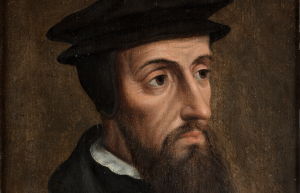
Parts 1-2: Calvin’s Confusion about Predestination
1 Defining Predestination
The opening post sets out the basic issue. Calvin taught that some people were predestined to eternal life and others to eternal damnation. But the Bible teaches election to life in Christ without teaching a corresponding election to damnation.
This post introduces Calvin, explains why his influence matters, and sets out the central biblical asymmetry:
Those who are saved are saved entirely because of God’s grace. Those who are lost are lost entirely because of their own unbelief.
2 What Calvin Said
Calvin was right about how the Bible should be read. But he did not consistently follow his own rule.
Calvin rightly warns Christians not to speculate beyond what God has revealed in Scripture. He says we must stop speaking when God stops speaking.
But when Calvin discusses predestination, he goes beyond the biblical text. He infers a hidden decree of damnation from the fact that not everyone hears or believes the Gospel. This post explains where Calvin’s confusion enters his argument.
Parts 3-8: Romans 9-11 and Its Old Testament Backgrounds

3 Summary of Romans 9–11
What is Paul actually saying in the Bible’s most important discussion of predestination?
Romans 9–11 is not an abstract philosophical explanation of why God saves some people and damns others. Paul is answering a pastoral question: why have many Israelites rejected Christ while many Gentiles have believed?
Paul explains that God’s Word has not failed. He chose Israel so that Christ would come into the world. He sends preachers so that people may hear the Gospel. He grafts sinners into Christ by grace. Those who fall are broken off because of unbelief.
Paul does not direct us to a hidden decree of damnation. He directs us to God’s revealed saving purpose.

4 Genesis, Malachi, and the Line of Promise
Why did God choose Abraham, Isaac, Jacob, and Israel?
God did not choose Israel as an illustration that he had rejected everyone else. He chose Israel so that through this nation the promised Christ would enter the world for the salvation of all people.
The promise to Abraham was expansive, not restrictive:
“In you all the families of the earth shall be blessed.”
This post traces the line of promise through Genesis, Malachi, and Romans 9:6–13.

5 Exodus, Pharaoh, Mercy, and Hardening
What does it mean that God has mercy on whom he wills and hardens whom he wills?
Romans 9:14–18 is often treated as though it teaches a symmetrical double predestination: mercy for some, damnation for others.
But Paul’s argument is not symmetrical.
God’s mercy is the source of salvation. Pharaoh’s hardening is God’s patient and judicial response to Pharaoh’s stubborn resistance. God does not maliciously prevent Pharaoh from believing. He keeps speaking to him, warning him, and displaying his power before him.
This post examines Exodus and Romans 9 carefully to show the difference between God’s gracious mercy and his judicial hardening.
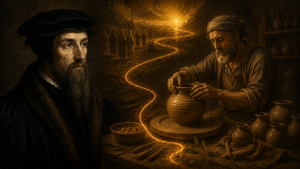
6 The Potter
Does God’s power mean that everything that happens is exactly what God wants to happen?
God is almighty. But the Bible does not say that God is pleased with everything that happens, nor that every human action reflects his desire.
Paul’s picture of God as the potter in Romans 9 draws on Jeremiah 18. The potter is sovereign over the clay. But the clay is spoiled. The potter responds to the spoiled clay and works it according to his wisdom.
This post explains why the potter image does not teach deterministic double predestination.

7 Don’t Climb into Heaven
How do I know that God has chosen me?
Do not try to climb into heaven to inspect God’s eternal decree. Do not descend into yourself to search for evidence that you are elect.
Look at Christ.
Romans 10 sits at the centre of Paul’s discussion of predestination because faith comes through hearing the Gospel. God gives you Christ publicly through the preached Word. The Gospel says that Christ died for you, your sins are forgiven, and you belong to him.
This is where Christian assurance is found.

8 The Olive Tree
Nobody should presume. Nobody should despair.
Paul concludes his argument with the picture of an olive tree.
Branches are broken off because of unbelief. Other branches are grafted in by God’s grace. Those who stand by faith should not become proud. Those who have fallen should not despair, because God is able to graft them in again.
The final post draws the whole series together:
Salvation is all from God. Damnation is all from us.
Do not look behind Christ for a hidden decree. Do not look inside yourself for proof that you are elect. Look at Christ. Hear his Gospel. Receive his gifts.
Where should I start?
The posts are designed to be read in order.
Start with Part 1 for the central argument. Parts 1 and 2 explain Calvin’s teaching and the nature of his confusion. Part 3 gives an overview of Romans 9–11. Parts 4–8 then work through the biblical themes in more detail.
Come and receive the Gospel with us
The doctrine of predestination is not given to make you speculate about a hidden decree. It is given to comfort you with God’s grace in Christ.
You do not need to wonder whether Jesus died for you.
He did.
You do not need to search inside yourself to work out whether you are elect.
Hear the Gospel. Christ died for you. Your sins are forgiven. You belong to him.
Come and receive his gifts with us:
If you live in or near Greater Manchester, Manchester Lutheran Church meets in person every Sunday, 10:45 for coffee, 11:00 for the service.
If you live outside Manchester, the Confessional Lutheran Church online congregation meets every Wednesday. Join with us online.